Original price was: $399.00.$97.99Current price is: $97.99.
- Shop with Ease
- Product guarantee 100% satisfaction
- Fast and Secure Payments
- Streamlined service, designed for your convenience.

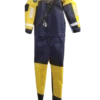
The SEASOFT TX3™ and SEASOFT TX™ Drysuits
These award winning drysuits are our best-selling suits for good reason, they were a SCUBALAB’S BEST BUY! SEASOFT’s TX3 and TX Drysuits have all the warmth and performance you expect in a SEASOFT drysuit yet they are extremely affordable.
The SEASOFT TX3 is our 3.5 mm high quality neoprene drysuit and the SEASOFT TX is 4.5 mm thick for extra warmth.
Both of these drysuits are incredibly easy to don and doff. They move through the water effortlessly with their low profiles. The SEASOFT TX3™ and SEASOFT TX™ have extraordinary stretch and freedom of movement and they make diving a more enjoyable experience. One of our customers emailed us,
You can dive knowing you have one of the best drysuits in the world yet you know that so many others, with lesser suits, paid way more than you did.
For nearly two decades SEASOFT Drysuits have been considered the best neoprene drysuits. That’s because every SEASOFT Drysuit is hand cut – one at a time! Then each component is hand glued, using the dive industry’s most advanced glues. Putting a drysuit together is as much art as it is science; here is how it is done.
When you cut neoprene, you can see that you have cut through tiny air bubbles on the cut edge; there are actually millions of them. When you craft a drysuit, the first thing that must be done is to block these bubbles as potential sources of a seam leak.
Special glue must be applied to the edges of the neoprene to cover the bubbles and allow for the two edges to eventually be glued together. This process is referred to as a “build up”. When this first layer of glue dries, a second layer of glue is applied. After this layer dries a third layer of drysuit glue is applied. At just the right moment of tackiness, when both sides are at the right consistency, they are joined together to create a waterproof seal that will bond them together for life.
The outer seams are reinforced by “blind stitching” them. Unlike a typical sewing machine that utilizes a needle moving up and down, blindstitching is done with a special machine that actually stitches sideways across the fabric pulling the two seams together.
Next, each section of the drysuit is turned inside out and the seams are coated with a special “wet” glue that penetrates the fabric creating another waterproof barrier as well as reinforcing the seams. After drying, a thicker glue is applied to this first layer to reinforce the seams again. A third layer is applied to give the seams their final reinforcement to create a lifetime of dryness.
While the sections were being assembled, the following were installed:
• STRETCHTEX™ wrist seals • SHARKSKIN Kneepads™
• STRETCHTEX™ neck seal • SEASOFT Suspender System
• STEALTH™ boots • Si-Tech Valves • YKK™ or Ti Zip SUPERSEAL™ waterproof zipper
The drysuit sections are then pieced together to make the final suit. The gluing and reinforcing processes are then repeated for these seams. You can see the hours that go into making a hand crafted SEASOFT suit dry and comfortable.
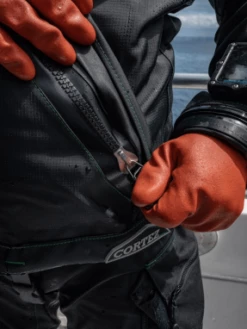
SEASOFT uses either YKK™ brass zippers or the Ti ZIP SUPERSEAL™ dry zipper for their drysuits.
YKK™ has been around for a long time and they are almost synonymous for “zipper”. YKK™ brass zippers have long been the standard for commercial drysuits.
Ti ZIP™’s SUPERSEAL™ drysuit zipper, manufactured by a German company, allows a diver to:
A. Traditionally install the zipper along the back.
B. Use a lighter and more flexible zipper than a traditional brass one.
C. Easily zip and unzip yourself in and out of your drysuit.
This last one is unique because being able to don and doff your own drysuit in a matter of seconds is not only convenient but can be crucial in an emergency, hot weather, when you have to “go”, and other situations.
STRETCHTEX™ is a special 3.5 mm neoprene used by SEASOFT for its neck and wrist seals. Why are these seals superior to latex? They’re:
- Warmer. Latex has no thermal protection while STRETCHTEX™ has 3.5 mm of warmth built in.
- More reliable and economical. Latex easily tears. STRETCHTEX™ has a nylon backing so it can easily be repaired, even in the field, and they typically lasts for years vs. latex that is often repeatedly replaced.
- Much more comfortable. Latex relies on constriction to keep the diver dry. STRETCHTEX™ relies on the air inside the folded neoprene trying to escape, this creates a firm but gentle pressure against the diver’s neck and wrist to create a watertight seal.
SEASOFT has one of the most comfortable and functional suspender systems. SEASOFT attaches 4 tabs to the inside of the suit. The fully adjustable suspender system attaches to the tabs with 4 flat side release buckles so it can be removed if desired. The system is mounted high so that when the top is released and hangs down the arms do not contact the ground. As usual, all the little details are well thought out.
SEASOFT is famous as the only company that makes wetsuit booties that are fully athletic with an elevated heel and built in orthotics. SEASOFT has brought this same technology to its drysuits. SEASOFT developed a drysuit version of its STEALTH Booties.
You will be diving with at least a hundred pounds of gear while wearing your drysuit. “Should you be diving with athletic footwear or a bedroom slipper?” The obvious answer is athletic footwear. SEASOFT makes the ONLY athletic drysuit bootie because details matter.
SI-TECH drysuit valves from Sweden are internationally accepted as the leading manufacturer of valves for drysuits; we use them because they are the best.
The SHARKSKIN Kneepads™ may be the best in the dive business. This super tough, abrasion resistant material is already molded to a neoprene backing so it does not require the extra padding that others add to their suits. This takes two layers down to one reducing the chances of a kneepad failure.
| Lifetime Warranty | Lifetime Leak Tests, Premium, Platinum |
|---|
Be the first to review “TX Drysuit”
Related products
EXPOSURE GEAR

Dry Suit Boots



EXPOSURE GEAR
Drysuits

Drysuits
EXPOSURE GEAR


EXPOSURE GEAR
Reviews
There are no reviews yet.